
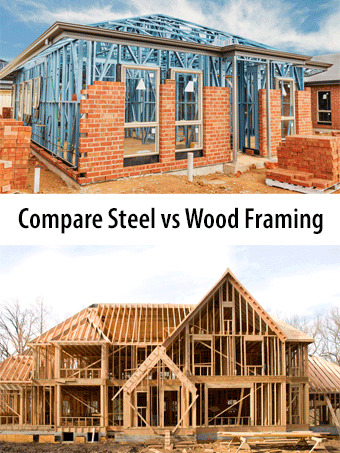
Framing is the skeleton of every building. It determines how a structure performs under load, how long it lasts, how energy-efficient it becomes, and how much it costs to build. For decades, wood has dominated residential construction in North America, while steel has held sway in commercial and industrial projects. But the lines are blurring. Rising lumber prices, stricter fire codes, sustainability targets, and advances in cold-formed steel engineering have made the wood-versus-steel debate more relevant than ever. This article breaks down the key factors so builders, developers, and architects can make an informed decision.
The Case for Wood Framing
Wood remains the most common framing material for residential construction, and for good reason. It is widely available, familiar to nearly every framing crew, and relatively forgiving during installation. Dimensional lumber and engineered wood products such as laminated veneer lumber (LVL) and I-joists offer predictable performance and can be specified for a wide range of spans and loads.
Key Advantages of Wood
- Cost efficiency in low- to mid-rise residential: For single-family homes and low-rise multifamily buildings, wood framing typically delivers the lowest installed cost.
- Workability: Wood can be cut, drilled, and fastened with standard tools, which speeds up on-site modifications.
- Thermal performance: Wood has natural insulating properties, and wood-framed walls are easier to insulate to high R-values.
- Carbon sequestration: Responsibly harvested lumber stores carbon for the life of the building, an increasingly important consideration for green certifications.
- Established supply chain: A mature network of suppliers, fabricators, and trades keeps projects moving.
Limitations of Wood
- Moisture vulnerability: Wood must be kept dry during storage and construction to prevent rot, mold, and dimensional movement.
- Combustibility: Wood framing requires fire-rated assemblies and sprinklers in many multifamily and commercial applications.
- Pest risk: Termites and other insects can compromise structural integrity without proper treatment and detailing.
- Price volatility: Lumber markets are notoriously cyclical, as the sharp price swings of recent years demonstrated.
The Case for Steel Framing
Cold-formed steel (CFS) framing has become the standard for commercial, industrial, and increasingly mid-rise residential projects. Steel studs are manufactured to precise tolerances, which translates into straighter walls, fewer callbacks, and better dimensional consistency than lumber. For projects where durability and code compliance are paramount, steel often wins the specification.
Key Advantages of Steel
- Strength-to-weight ratio: Steel studs deliver high load capacity with less material, allowing longer spans and taller walls.
- Non-combustible: Steel framing does not burn, which can reduce insurance premiums and simplify fire-rated assembly design.
- Dimensional stability: Steel does not warp, shrink, twist, or split, and it resists moisture and pests.
- Recyclability: Steel is one of the most recycled materials on earth, and scrap retains high value.
- Design flexibility: CFS can be engineered and prefabricated off-site, accelerating schedules and reducing waste.
Limitations of Steel
- Thermal bridging: Steel conducts heat efficiently, so exterior walls require thermal breaks to meet energy codes.
- Higher material cost: Raw steel framing typically costs more per linear foot than dimensional lumber.
- Specialized labor: Steel framing requires trained crews and different fastening methods, which can limit the bidder pool.
- Acoustic challenges: Steel-framed assemblies often need additional detailing to control sound transmission between units.
Side-by-Side Comparison
| Material cost | Generally lower for residential | Generally higher |
| Installed cost (low-rise residential) | Lower and well understood | Higher unless prefabricated |
| Fire resistance | Combustible; requires rated assemblies | Non-combustible |
| Moisture and pest resistance | Requires careful detailing | High resistance |
| Thermal performance | Naturally insulating | Requires thermal breaks |
| Dimensional stability | Can shrink and warp over time | Highly stable |
| Sustainability | Renewable; sequesters carbon | Highly recyclable; energy-intensive production |
| Labor availability | Widely available | Specialized crews often required |
| Best fit | Single-family and low-rise residential | Commercial, industrial, mid-rise, high-durability projects |
How to Choose the Right Framing System
There is no universally superior framing material. The right choice depends on the specific demands of each project. Consider the following decision framework:
The Bottom Line
Wood and steel framing are both mature, proven technologies, and each excels in the right context. For residential builders seeking cost efficiency and ease of construction, wood remains the pragmatic default. For projects demanding fire resistance, dimensional precision, and long service life, steel is the stronger specification. The most successful projects result when the framing decision is made early, informed by code requirements, lifecycle costs, and the capabilities of the local labor market. Increasingly, hybrid approaches—steel for load-bearing elements and wood where thermal performance matters—offer the best of both worlds.