
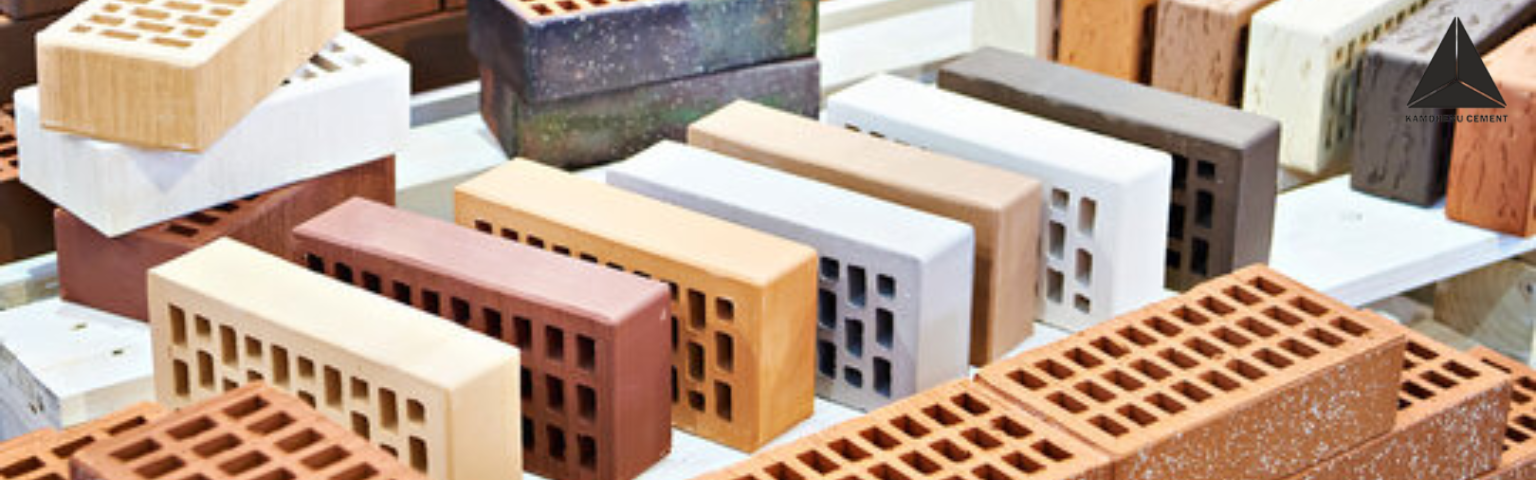
Bricks remain one of the most enduring and versatile building materials in the construction industry. Despite the rise of steel, glass, and advanced composites, bricks continue to dominate facades, load-bearing walls, and decorative elements across residential, commercial, and industrial projects. The reason is simple: bricks offer an exceptional combination of strength, thermal performance, fire resistance, and aesthetic flexibility. However, not all bricks are created equal. Modern construction relies on a diverse range of brick types, each engineered for specific applications, environmental conditions, and performance requirements. Understanding these categories is essential for architects, engineers, and contractors who need to specify the right material for the job. This article explores the most popular types of bricks used in modern construction, their characteristics, and their ideal use cases.
Burnt Clay Bricks: The Industry Standard
Burnt clay bricks are the most traditional and widely used brick type in construction. They are manufactured by molding clay and firing it in a kiln at high temperatures, a process that induces vitrification and produces a durable, weather-resistant unit. Modern production has refined this centuries-old technique with precise temperature control and automated handling, resulting in consistent quality and dimensional accuracy.
Burnt clay bricks are typically classified into four grades based on their compressive strength and finish:
- First-class bricks: Highly compressed, uniform in shape, and free from defects. Used for permanent, high-quality structures and exposed facades.
- Second-class bricks: Slightly irregular with minor cracks, offering good strength for general masonry work.
- Third-class bricks: Lower quality, used for temporary structures or internal partition walls.
- Fourth-class bricks: Over-burnt and brittle, typically crushed and used as aggregate.
Their excellent thermal mass, acoustic insulation, and fire resistance make burnt clay bricks a preferred choice for both structural and architectural applications.
Concrete Bricks: Engineered for Consistency
Concrete bricks are manufactured from a mixture of cement, sand, and aggregates, cast into molds and cured under controlled conditions. Unlike clay bricks, they do not require firing, which reduces energy consumption and carbon emissions during production. This makes them an increasingly attractive option for sustainable construction projects.
Concrete bricks offer several distinct advantages:
- Dimensional accuracy: Uniform size and shape reduce mortar consumption and speed up installation.
- High compressive strength: Suitable for load-bearing walls and structural applications.
- Design flexibility: Can be produced in various colors, textures, and finishes, including split-face and smooth surfaces.
- Cost efficiency: Generally more affordable than high-grade clay bricks in many markets.
They are commonly used in commercial buildings, boundary walls, and modern facades where a clean, minimalist aesthetic is desired.
Fly Ash Bricks: The Sustainable Alternative
Fly ash bricks represent a significant advancement in green construction. They are produced from fly ash, a byproduct of coal combustion in thermal power plants, combined with cement, lime, or gypsum as a binder. This approach diverts industrial waste from landfills while delivering a high-performance building material.
Key benefits of fly ash bricks include:
- Lower environmental impact: Reduced reliance on fired clay and utilization of industrial waste.
- Superior thermal insulation: Lower thermal conductivity improves energy efficiency in buildings.
- High strength-to-weight ratio: Lighter than traditional clay bricks, reducing structural load.
- Excellent water resistance: Dense composition minimizes water absorption.
Fly ash bricks are increasingly specified in green building certifications and large-scale infrastructure projects where sustainability targets are paramount.
Calcium Silicate Bricks: Precision and Performance
Calcium silicate bricks, also known as sand-lime bricks, are manufactured by mixing sand, lime, and water and hardening the mixture in high-pressure steam autoclaves. This process creates a dense, dimensionally stable product with a smooth, uniform appearance.
These bricks are particularly valued for their:
- Exceptional dimensional precision: Ideal for thin-joint masonry systems.
- High fire resistance: Non-combustible and capable of withstanding extreme temperatures.
- Sound insulation: Dense structure provides effective acoustic control.
- Uniform color: Consistent pigmentation eliminates the natural variation found in clay bricks.
Calcium silicate bricks are frequently used in European construction for load-bearing walls, fair-faced masonry, and acoustic barriers.
Comparison of Popular Brick Types
The following table summarizes the key attributes of the brick types discussed above, providing a quick reference for material selection.
| Burnt Clay | Natural clay | High (varies by grade) | Moderate to high | Structural walls, facades |
| Concrete | Cement, sand, aggregate | High | Moderate | Commercial buildings, boundary walls |
| Fly Ash | Fly ash, cement, lime | Moderate to high | Low | Sustainable construction, partitions |
| Calcium Silicate | Sand, lime | High | Low | Thin-joint masonry, acoustic walls |
Specialty Bricks for Modern Demands
Beyond the primary categories, modern construction increasingly relies on specialty bricks engineered for specific performance criteria. These include:
Selecting the Right Brick for Your Project
The choice of brick type should be guided by a careful assessment of project requirements. Structural load, environmental exposure, thermal and acoustic performance, aesthetic goals, and sustainability objectives all play a role. For load-bearing applications in harsh climates, burnt clay or engineering bricks remain reliable choices. For green building projects with strict energy targets, fly ash bricks and AAC blocks offer compelling advantages. For precise, fair-faced masonry, calcium silicate bricks deliver unmatched consistency.
Modern construction benefits from a remarkably diverse brick palette. By understanding the properties and applications of each type, professionals can make informed decisions that balance performance, cost, and environmental responsibility. The right brick is not simply the most common one—it is the one that best serves the specific demands of the structure and the vision of the design team.