
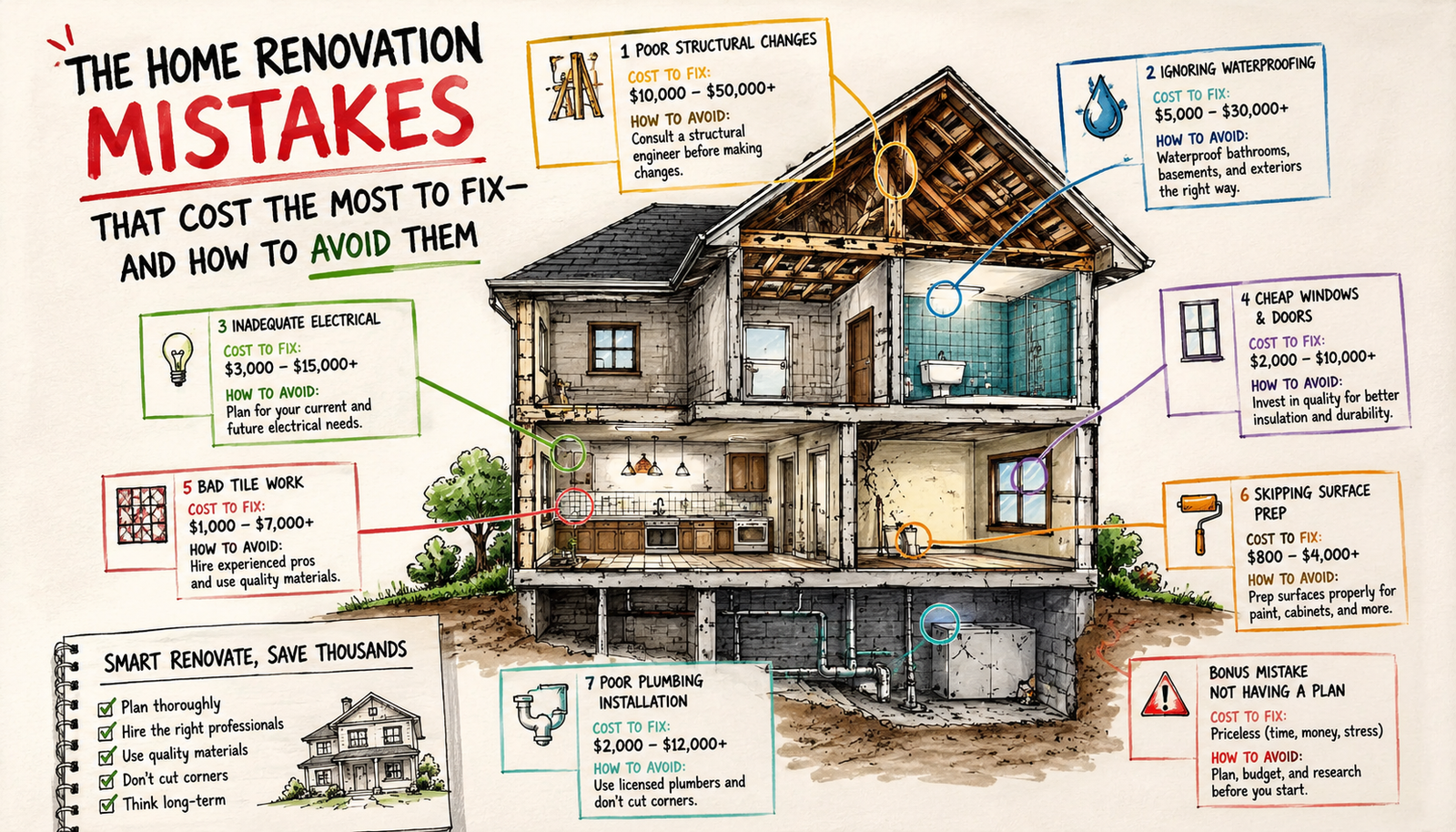
Home renovation is one of the most significant investments a homeowner can make, both financially and emotionally. Whether you are modernizing a dated kitchen, converting a basement into a livable space, or undertaking a full-scale remodel, the stakes are high. Unfortunately, even well-intentioned projects frequently derail due to avoidable errors that inflate budgets, extend timelines, and compromise the quality of the finished result. As technology reshapes how we plan, source, and execute renovations, understanding these pitfalls has never been more important. This guide examines the most common home renovation mistakes and provides actionable strategies to sidestep them.
Failing to Plan Before You Build
The single most damaging mistake in any renovation is inadequate planning. Homeowners often rush into demolition or commit to contractors before defining scope, budget, and design intent. The consequences ripple through every phase of the project.
Vague Scope Definition
Without a clearly documented scope of work, contractors interpret requirements differently, change orders multiply, and expectations diverge. A precise scope should specify materials, finishes, dimensions, and deliverables.
Unrealistic Budgeting
Industry data consistently shows that renovations exceed initial budgets far more often than they stay within them. A common error is budgeting only for visible costs while ignoring permits, contingency, and hidden infrastructure work.
- Build in a contingency of 15–20% to absorb unforeseen issues such as outdated wiring or water damage.
- Account for soft costs including permits, design fees, inspections, and temporary housing if required.
- Price materials at current market rates rather than relying on outdated assumptions.
Choosing Contractors Without Proper Vetting
Hiring the wrong contractor is a recipe for delays, defective workmanship, and legal disputes. The temptation to select the lowest bid or the fastest-available crew frequently backfires.
What to Verify
The Low-Bid Trap
An unusually low bid often signals omitted work, inferior materials, or future change orders. Compare bids line by line rather than on total price alone, and treat significant discrepancies as a prompt for deeper scrutiny.
Ignoring Permits and Building Codes
Skipping permits to save time or money is a false economy. Unpermitted work can void insurance claims, complicate future sales, and force costly retroactive corrections. Building codes exist to ensure safety, structural integrity, and energy efficiency—treat them as non-negotiable.
- Confirm permit requirements with your local building authority before work begins.
- Schedule inspections at required milestones and document all approvals.
- Retain records of permits and inspection sign-offs for resale and insurance purposes.
Underestimating the Impact of Hidden Problems
Renovations routinely uncover conditions that were invisible during initial assessment: outdated electrical systems, asbestos, mold, compromised plumbing, or structural deficiencies. Homeowners who fail to plan for these discoveries face abrupt budget shocks and schedule disruptions.
| Outdated wiring | Full electrical rewire; code compliance costs | Pre-renovation electrical inspection |
| Asbestos or lead | Mandated abatement; project delays | Hazard testing before demolition |
| Water damage or mold | Remediation and material replacement | Moisture assessment and plumbing review |
| Structural deficiencies | Engineering review; reinforced framing | Structural inspection by a qualified engineer |
Making Decisions on the Fly
Renovation projects demand dozens of decisions, and postponing them until construction is underway creates bottlenecks. Delayed selections for tile, fixtures, cabinetry, or paint stall trades and extend timelines. Establish a decision calendar aligned with the construction schedule, and finalize material selections before their corresponding phases begin.
Overlooking the Importance of Documentation
Change orders, verbal agreements, and revised drawings must be documented in writing. Undocumented changes are a leading source of disputes and payment conflicts. Maintain a centralized project file—digital or physical—containing contracts, change orders, receipts, warranties, and inspection records.
Neglecting Energy Efficiency and Future Needs
A renovation is the ideal moment to improve insulation, upgrade HVAC systems, install smart-home infrastructure, and future-proof electrical capacity. Skipping these upgrades means reopening finished walls later at significantly higher cost. Integrate efficiency improvements into the initial plan rather than treating them as optional add-ons.
Final Thoughts
Successful renovations are built on disciplined planning, rigorous contractor selection, regulatory compliance, and transparent documentation. By anticipating hidden costs, finalizing decisions early, and treating permits and codes as essential rather than optional, homeowners can protect their investment and achieve the outcome they envision. The difference between a stressful, over-budget ordeal and a smooth, rewarding transformation lies largely in avoiding these common—and entirely preventable—mistakes.